Showing posts with label nature-friendly parks. Show all posts

Thursday, 1 May 2025

Bee Picnic

We held our ‘Bee-Picnic’ a week later than originally planned due to a rain storm on Bank Holiday Monday – well it was a Bank Holiday after all, what else would you expect? - causing us to postpone. 

The Saturday after was a beautiful sunny day and everyone had a lovely time sitting out on the grass next to a flowerbed of pansies eating their bee friendly picnics. The event was organized to promote our ongoing campaign to persuade the City Council to stop using herbicides, which are a threat to biodiversity and a danger to human health, particularly that of children; and to raise awareness of the damage done by pesticide use more generally, to try to encourage schools, businesses and private individuals to stop using them.

A recent study found that populations of flying insects in the UK had fallen by 60% between 2004 and 2021, (1) and by a further 18% by 2023 (2).  This is a decline that has been ongoing since the 1970s.  This has major implications for food security as many of our crops rely on insects to pollinate them; and major implications for biodiversity, with many insect species threatened with extinction and knock on effects further up the food chain amongst other species, such as many birds.  Insects are suffering from both direct poisoning and loss of habitat.


Interestingly, in the park, opposite to where we were sitting Leicester City Council had a notice board about the value of bees to biodiversity with ideas as to how we can help to protect bees. They didn’t mention on the board that they themselves are spraying in their parks to keep them ‘tidy’ and helping to cause the decline of bees!! 


The impact of herbicide use on human health is also a major concern, since there is evidence of exposure to many common herbicides having long-term health implications.  Many have been identified as potential carcinogens, and there is also evidence of them causing liver damage, and of them increasing the likelihood of someone developing diabetes and cardiovascular disease (3), with young children at particular risk of exposure in urban areas, due to the way that herbicides are used by councils in areas such as parks particularly when children’s play areas are sprayed. 

As some councils have already gone pesticide free (4), and are allowing hard to mow areas to remain wild and adopting alternatives where some control of wild plants is needed, for instance on pavements (5), to protect both biodiversity and their citizens, we wonder why Leicester City Council cannot  follow their examples and stop spraying our parks and green spaces in particular. 

The picnic was a great success with people wearing Bee costumes and at the end taking part in a ‘bee die-in’ as a photo opportunity to forward to the Council to further our request for no more spraying and keeping our children and bees safe. 


We are planning another event later in the year so look out for that if you would like to take part! 

*Updated 13th May 2025

Our press release on this event was covered in the Leicester Gazette and the Northern Eco. The reporter from the Northern Eco, Sarah Hartley, had contacted Hannah Wakley from Leics. FoE before the picnic to learn more about the campaign as she is bringing together people campaigning against pesticide use across the UK and has set up a WhatsApp group. Hannah noticed that Leicester City Council had claimed, in their response to the press release, that glyphosate is certified by the Soil Association. She pointed out to Sarah that this is completely untrue and in fact the Soil Association have been campaigning for glyphosate to be banned for years! Sarah went back to the City Council, they admitted that it is only the adjuvant that is certified and she has now published a correction. 

Careful Leicester City Council we are watching you!!  


Tuesday, 29 October 2024

Taking our pesticides concerns to City Council scrutiny committee

We've been struggling to talk to councillors and officers about our concerns around the use of pesticides in parks, so we have submitted a statement to the Culture and Neighbourhoods Scrutiny Commission and we will be attending their meeting next week, on Monday 4th November at 5:30 pm at City Hall. Here's our statement in full:

"Leicester Friends of the Earth have been discussing the council's use of chemical pesticides in the parks with officers and councillors for the past three years. After trialling a different product last year, the council returned to using glyphosate in parks this year, albeit at a lower concentration than previously used. The council's target for pesticide use in the Biodiversity Action Plan is to reduce it by 50% by 2030. We think that target is disappointingly unambitious when other local authorities have already moved away from chemical pesticides altogether. The Pesticide Action Network provide detailed information for local authorities on how to go pesticide free on their website. 

The areas that are sprayed in the parks do seem to have been reduced in the last couple of years - we can no longer see any sign of spraying around tree bases in parks, for example, which is an improvement. (Tree bases on road verges are still being sprayed, sadly.) But we are still seeing signs of spraying around and within children's play areas, which is concerning when it is known that children are more vulnerable to the effects of chemical pesticides than adults. I notice this in my local park in Evington, which makes me nervous about taking my nephew there. Like all toddlers, he likes to play with the soil and I spend a lot of time carrying him away from the sprayed, dead grass around the edges of the patches of woodchip and under the fence. Many people will not recognise what this dead grass means, so they will not be able to protect their children from being exposed to the pesticide residues there. 

We are concerned about the use of any chemical pesticides, and glyphosate in particular, for a number of reasons. There have been several studies linking glyphosate to cancers in people, particularly non-Hodgkin lymphoma. The research was collated in a meta-analysis published in the academic journal Mutation Research in 2019. Children are particularly vulnerable to the effects of pesticides, because their skin absorbs chemicals more easily and because they are more likely to be playing on the ground. The evidence for the ill-effects of glyphosate on bees and other wildlife has also been mounting over the last few years. It is now known that glyphosate harms bees’ digestive systems, for example, affecting their ability to absorb food, and also damages the ability of wild bees to regulate the temperature of their colonies. When insect populations are falling so alarmingly, we do not believe we should be doing anything to make the situation worse. 

Leicester has long claimed to be the UK's first environment city, but on this issue, it is clear that we are not taking the lead. In fact, we are falling far behind other towns and cities."

After we've read the statement, the members of the committee will discuss and we might be given the opportunity to ask a follow-up question, depending on the chair. We are preparing for this and will make sure we have some research to share at our fingertips.

If you're free next Monday, we'd love to have more people observing this meeting. Councillors will notice if people care enough about the issue to come to the meeting. You'll only be able to watch and listen, but just being there will make a difference. This item is first on the agenda and we can leave afterwards, so you'd probably only need to stay for 30 minutes. Please come if you can! We'll meet outside City Hall on Charles Street at 5:15 pm and go in together. 

Thursday, 4 April 2024

Survey reveals love of parks in Leicester

We have spent the last few months analysing the data we collected in our park users survey last summer and the results are clear: people in Leicester love their parks.

We questioned 157 people using seven medium-sized parks in Leicester: Appleton, Willowbrook, Stokeswood, Evington, Hamilton, Humberstone and Spinney Hill Park (the same parks we were assessing for our nature-friendly park award). The majority visited their local park at least once a week, with many people visiting every day. The people interviewed were broadly representative of Leicester’s population, with 49% female and 46% male, a range of ages from 16-75+ and 52% of Asian heritage. 

People were asked to name the four things they liked best about their park and aspects of nature were mentioned most often - greenery, trees, water sources and wildlife. 

The parks provide people with access to nature and greenery, in contrast to their urban surroundings. We know that having access to nature is important for people’s physical and mental health. People felt that the parks are open, friendly, peaceful places. They are drawn to them for exercise but also to watch wildlife and relax. 

The City Council use chemical pesticides as part of their management of the parks, to control vegetation. We asked people how they felt about that and over two thirds (68%) were opposed to it. They were opposed to the use of pesticides in principle and felt they damage the environment and cause harm to wildlife and people. A majority of interviewees (85%) supported the Council using more natural methods. 

We’d like to see the Council listen to people’s views and stop using these harmful chemicals in Leicester’s parks and green spaces. People go to their parks to connect with nature. More wild plants mean more insects, more birds and more life! 

The survey also revealed that people want the Council to develop the parks with more information provision and more support for wildlife, with things like bird and bat boxes. 

The full report and the appendices are both available to download. 


Tuesday, 5 March 2024

Tree planted in Evington Park for nature-friendly park award

Yesterday, we planted a tree in Evington Park in recognition of the park winning our nature-friendly park award. (See all our posts about this project here.) 

There is some excellent work happening in Leicester’s parks to encourage wildlife and we wanted to celebrate that. The UK is one of the most nature-depleted countries in the world, with more than one in seven of our native species facing extinction. It is therefore more important than ever that we make space for nature in our cities. All of us involved in this project have really enjoyed visiting all the parks and we were amazed at the range of wild plants and animals we found. We are so lucky to have these green oases in our neighbourhoods. 

We donated a native Crab Apple tree to celebrate the award, which will provide blossom for pollinating insects and fruit for the birds. We brought it to the park by bike trailer, along with a plaque which they presented to park officers. The event was attended by Evington councillors, Deepak Bajaj, Jenny Joannou and Zuffar Haq, the Police and Crime Commissioner Rupert Matthews, who was visiting the area that day, a representative of Leicestershire and Rutland Wildlife Trust, local residents and some children from a Leicestershire school who wanted to learn how to plant a tree! 

Deputy city mayor Cllr Elly Cutkelvin, who’s responsible for the city’s parks, was not able to attend but sent the following message: 

“We work hard to ensure that our parks and open spaces are a haven for both people and wildlife, so it’s great that our efforts have been recognised by Leicester Friends of the Earth.

“The trees, ponds and planting in our parks provide a wide range of habitats for insects, birds and small mammals, helping to create space for nature in the heart of the city.

“I’m delighted that Leicester Friends of the Earth will be planting a tree in Evington Park to acknowledge its designation as a nature-friendly park, and I hope that people will enjoy visiting their local park to discover the wildlife on their doorstep.”

Sunday, 25 February 2024

Announcing the winner of the Nature-Friendly Park Award

We have some exciting news today, which we know everyone has been waiting for. We can now announce that the winner of our Nature-Friendly Park award is... [drum roll]

Evington Park!

You can download the full report on our habitats assessment visits last summer here if you'd like to read that. (And for anyone new to blog, you can read more about our nature-friendly parks project here.) In recognition of the award, we will be planting a Crab Apple tree in Evington Park and presenting a plaque on Monday 4th March at 1:30 pm, in the fruit garden area just behind the park house (https://what3words.com/learn.state.quest). Park officers and the Evington councillors will be attending. You are very welcome to come too. 


Sunday, 27 August 2023

Survey - tell us your views about your local park!

We've now completed our visits to the seven Leicester parks we are considering for the nature-friendly park award. We are going through all the information we have collected and writing up a report for the City Council, which will include some analysis of the questionnaires we conducted in the parks. If you didn't manage to come to any of our stalls, you can still share your views by completing the online version of the questionnaire here. 

Sunday, 11 June 2023

Nature-friendly parks: an update

We're now over halfway through our parks assessments. After getting caught in a sudden deluge in Hamilton Park, we've been lucky with the weather and we've completed data collection in Evington, Spinney Hill, Willowbrook and Humberstone Parks. We'll be returning to Hamilton Park in July to conduct surveys of park users. 

Assessing the wildlife habitats in each park has been a fascinating experience. We've found a lot of diversity and some species that we didn't expect to see or hear. Two local botanists have accompanied us on these visits and conducted full plant surveys. A member of the local bat group has also been coming along to help us find and record bats and the keen birdwatchers in our group have been listening and looking for birds. We will share all of the information we have collected with the City Council. While we walk round, we all complete an assessment sheet with categories for wet areas, trees, grass management, flowers, bats, birds re-wilded areas, interpretation boards and harms (litter etc). One definite piece of good news is that we've seen no sign of herbicide use in the parks this year!

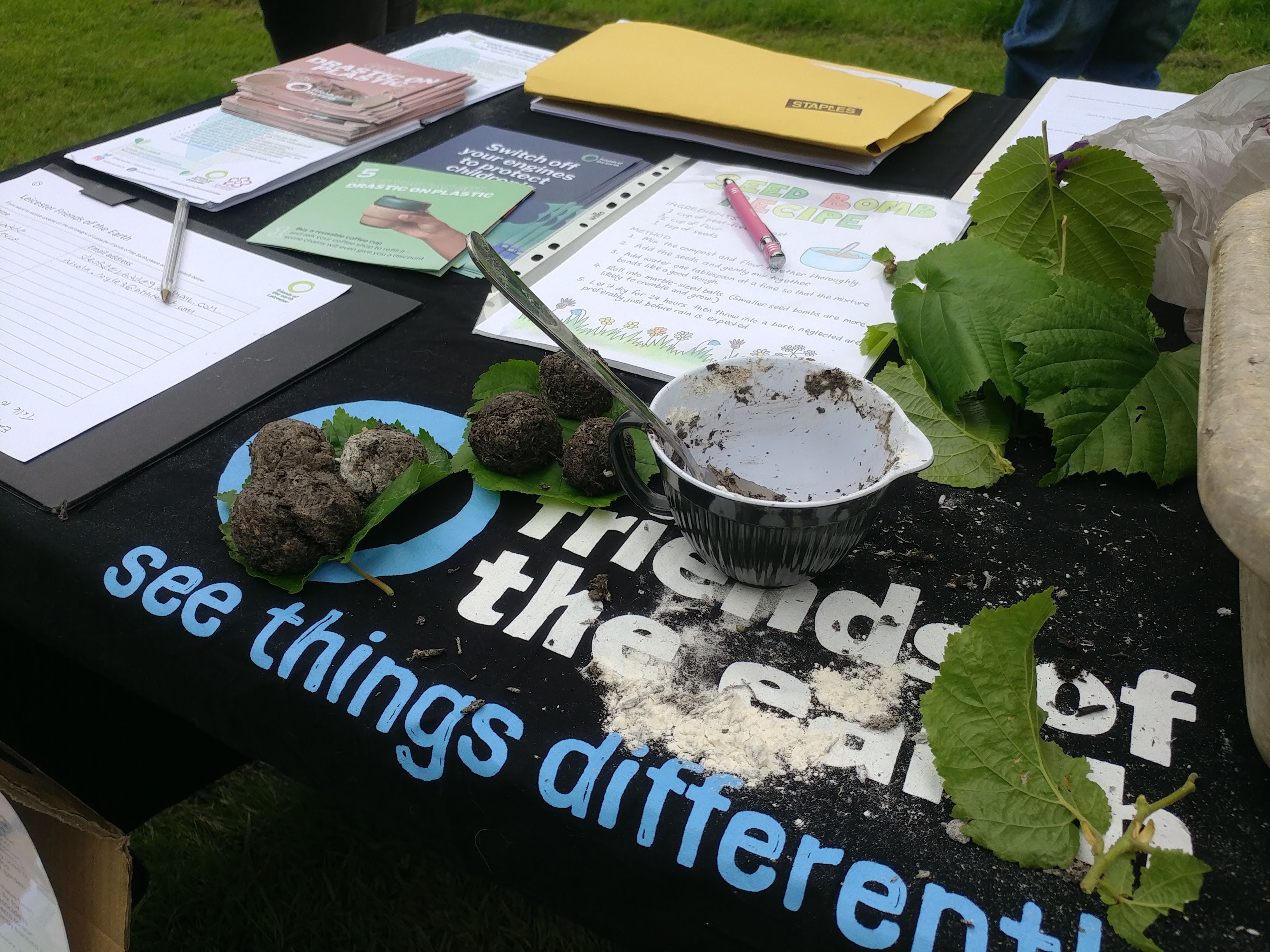
At our Saturday stalls, we've been conducting a questionnaire to find out people's experiences of nature in their local park and their opinions on the park's management. There will be an online version of this survey soon, if you've not managed to come along to one of our stalls and still want to have your say. To encourage people to come and talk to us, we've been making seed bombs with children (and some adults too), so that people can help to spread wildflowers in their gardens and their streets! These have been very popular. 

Finally, we've now come up with a definition for what we think constitutes a nature-friendly park, which we're using as a guide for our assessments:

A nature-friendly park creates as much space as possible for a diversity of wild plants, insects, birds and animals, while also being accessible to the surrounding human community and encouraging people to appreciate the wildlife on their doorstep. 

We'd love to hear what you think!


Wednesday, 12 April 2023

Our schedule of park visits for Friday evening surveys and Saturday afternoon stalls

To give an award to the most nature-friendly park, we need to assess their current state and survey people who use the park. This is our schedule for visiting each of the parks:   


Fridays (evening visits looking at habitats)

Saturdays (stalls with questionnaire)

Hamilton

5th May

6th May

Evington

12th May

13th May

Spinney Hills

19th May

20th May

Willowbrook

26th May

27th May

Humberstone

9th June

10th June

Stokes Wood

16th June

17th June

Appleton

30th June

1st July

Reserve

7th July

8th July

Friday evenings in May will start at 7:30pm and in June at 8pm. We will be starting later in June as we are aiming to check bat populations so we need the twilight to arrive for them to come out.  

Our Saturday afternoon stalls will start at 3pm. We are aiming to survey park users while we entertain their children by making wildflower "seed bombs".

If you can spare the time to join us in any of the parks, especially if you are knowledgeable about an aspect of wildlife and can come along on a Friday evening, you would be very welcome to join us!


Sunday, 26 March 2023

Announcing our award for the most nature-friendly park

We will be presenting an award to the most nature-friendly park in the city this summer.  The ‘Save our Wild Isles’ campaign, launched alongside David Attenborough’s new Wild Isles documentary series, encourages everyone to ‘go wild once a week’. We will be highlighting wildlife to visit on our doorsteps in Leicester.

There is so much excellent work happening in Leicester’s parks to encourage wildlife and we want to celebrate that. The UK is one of the most nature-depleted countries in the world and more than one in seven of our native species is facing extinction. It is therefore more important than ever that we make space for nature in our cities. We need to allow wildlife to thrive alongside us. 

We will be looking at parks between 8 and 20 hectares, to ensure that we are not trying to compare the smallest and largest parks in the city and to make the process as fair as possible. We are creating an assessment scheme, working with local botanists, birdwatchers and ecologists, to determine how to choose the most nature-friendly park. We will look at the types of habitats in each park, from ponds to meadows to trees. We will visit each park twice, at different times of day, and try to record the species that they see and hear. (If you want to get involved in this work, please get in touch!)

We have also created a survey for park users, to collect their views on the space for nature in their local park and what else they would like to see. After the award has been presented, we will share the survey data with the City Council. 

When we visit each park, we will keep notes on the wildlife that we have seen and share them here on our blog and social media afterwards. We hope that this will encourage people to learn more about the biodiversity on their doorstep. It is widely recognised that feeling more connected to nature is beneficial for our mental health. We are also more likely to protect what we love. Where better to start learning more about nature than in your local park?